sMRT ALERT AIS & DSC Class M MOB Beacon
RRP:€350.90
You save: €31.90 (9%)
Price: €319.00
€263.64 ex. VAT
sMRT MOA-50070
Preorder
7 days (approx.)
+ −

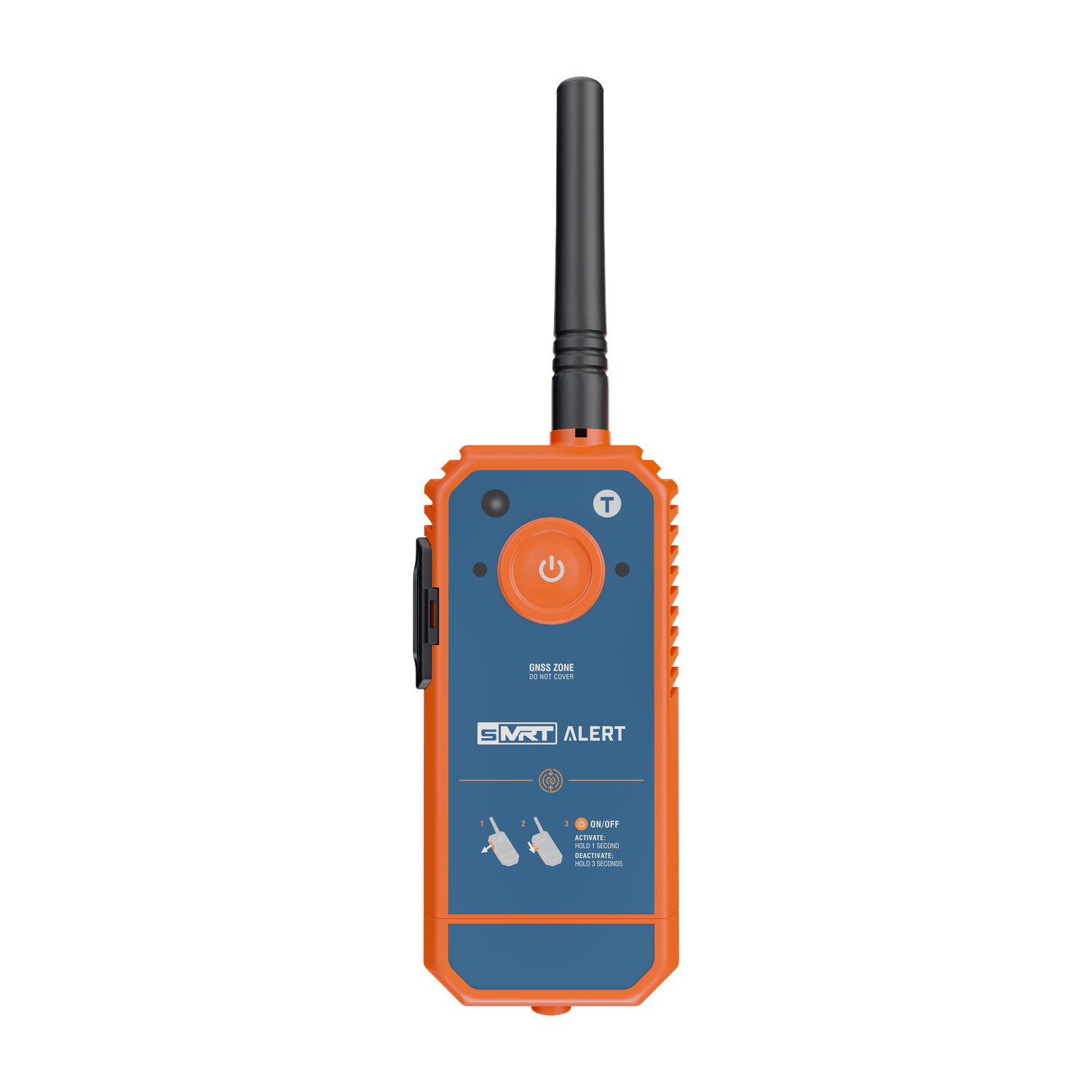
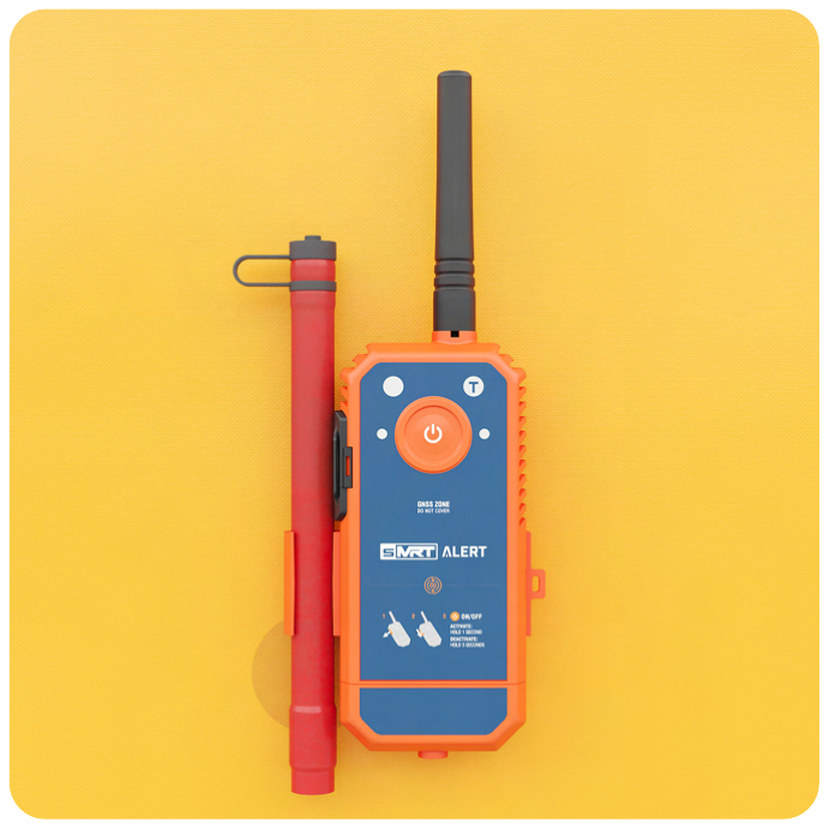
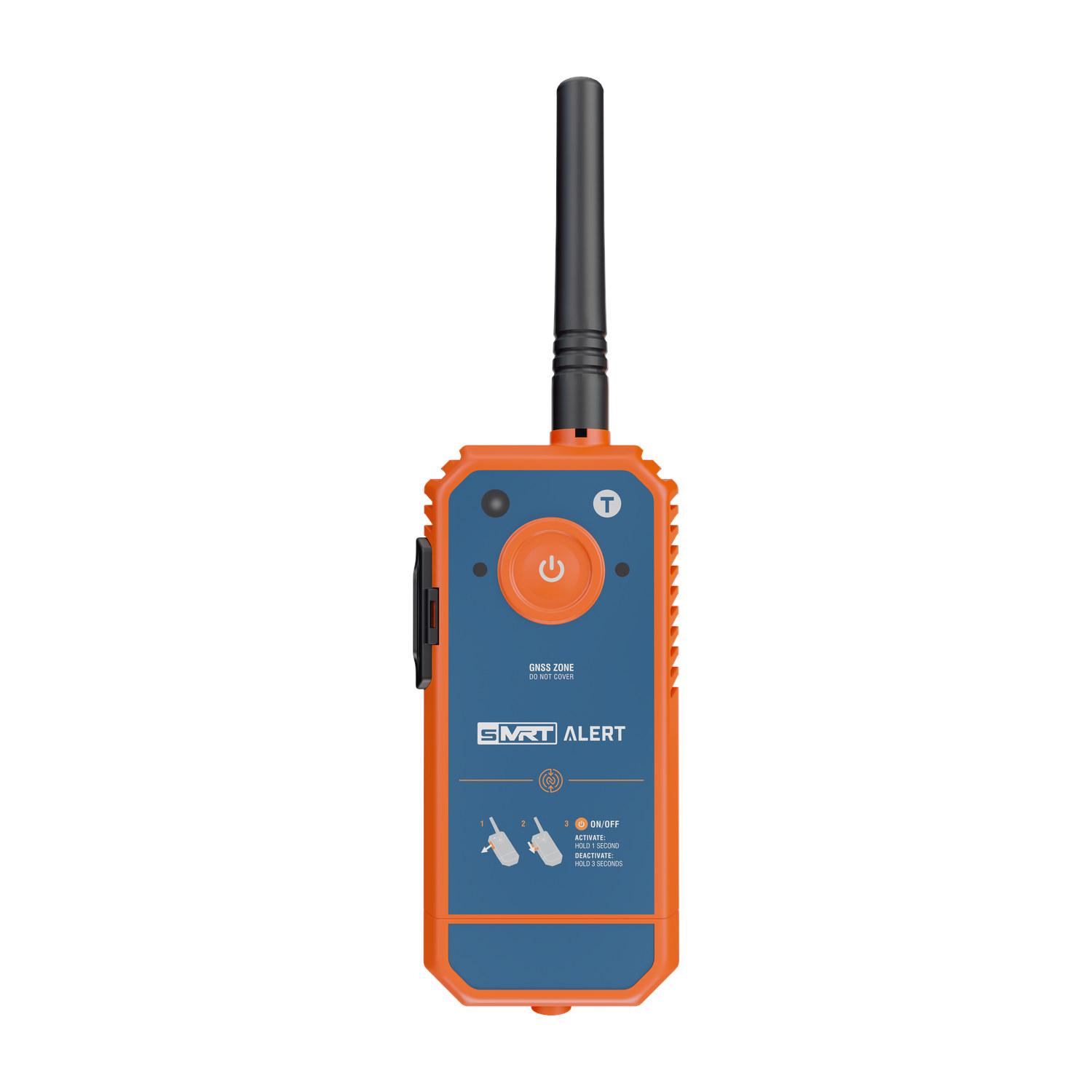
sMRT ALERT AIS and DSC Class M MOB beacon, front view on whiteThe sMRT ALERT is a Class M man-overboard (MOB) Maritime Survivor Locating Device (MSLD) made by Marine Rescue Technologies Ltd (MRT). Once the beacon is armed, it is designed to activate automatically if it is immersed in water. It can also be activated by hand.

After activation it transmits GMDSS VHF DSC distress alerts and keeps its AIS position up to date. A GPS and Galileo receiver provides the position, and a 30-candela strobe helps rescuers see the beacon.

AIS and VHF DSC alerts - Within 30 seconds of a GNSS position the beacon transmits AIS on AIS channel 1 (161.975 MHz) and AIS channel 2 (162.025 MHz) at a nominal 1 W EIRP. The first open-loop DSC alert on VHF channel 70 (156.525 MHz) is sent within 30 seconds of activation, then every 5 minutes for the first 30 minutes and every 10 minutes after that, until a VHF DSC acknowledgement is received or the battery is exhausted. The typical alerting radius is 5 NM. The first DSC message with GPS data is sent as soon as a GNSS position is available.

Class M - The sMRT ALERT complies with ECC/DEC/(22)02 for man-overboard devices. In countries that adopt that decision, only Class M MOB devices and mobile aids to navigation may operate on AIS channels 1 and 2 from 31 December 2024. Devices that are not Class M are restricted to AIS channel 2006, which is not monitored for emergencies.
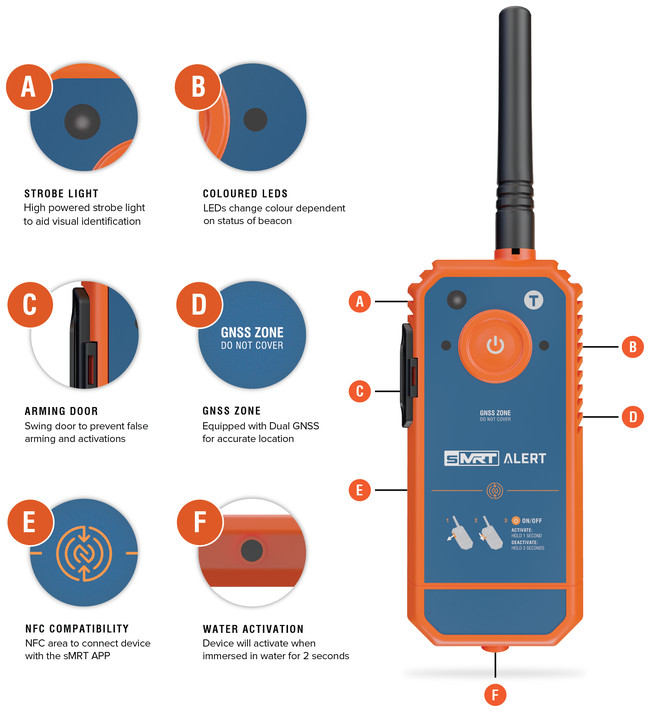
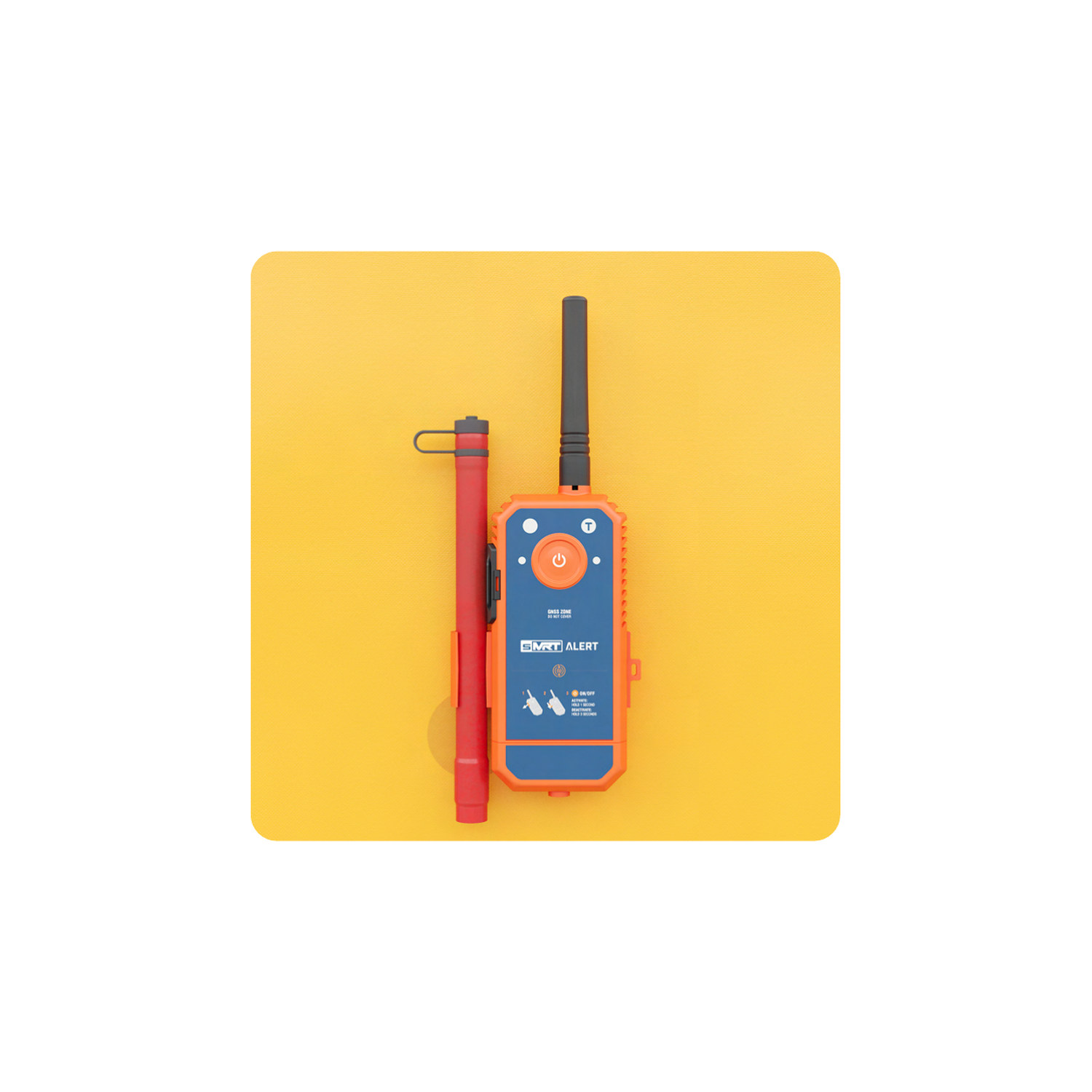
sMRT ALERT features: strobe, coloured LEDs, arming door, GNSS zone, NFC and water activation

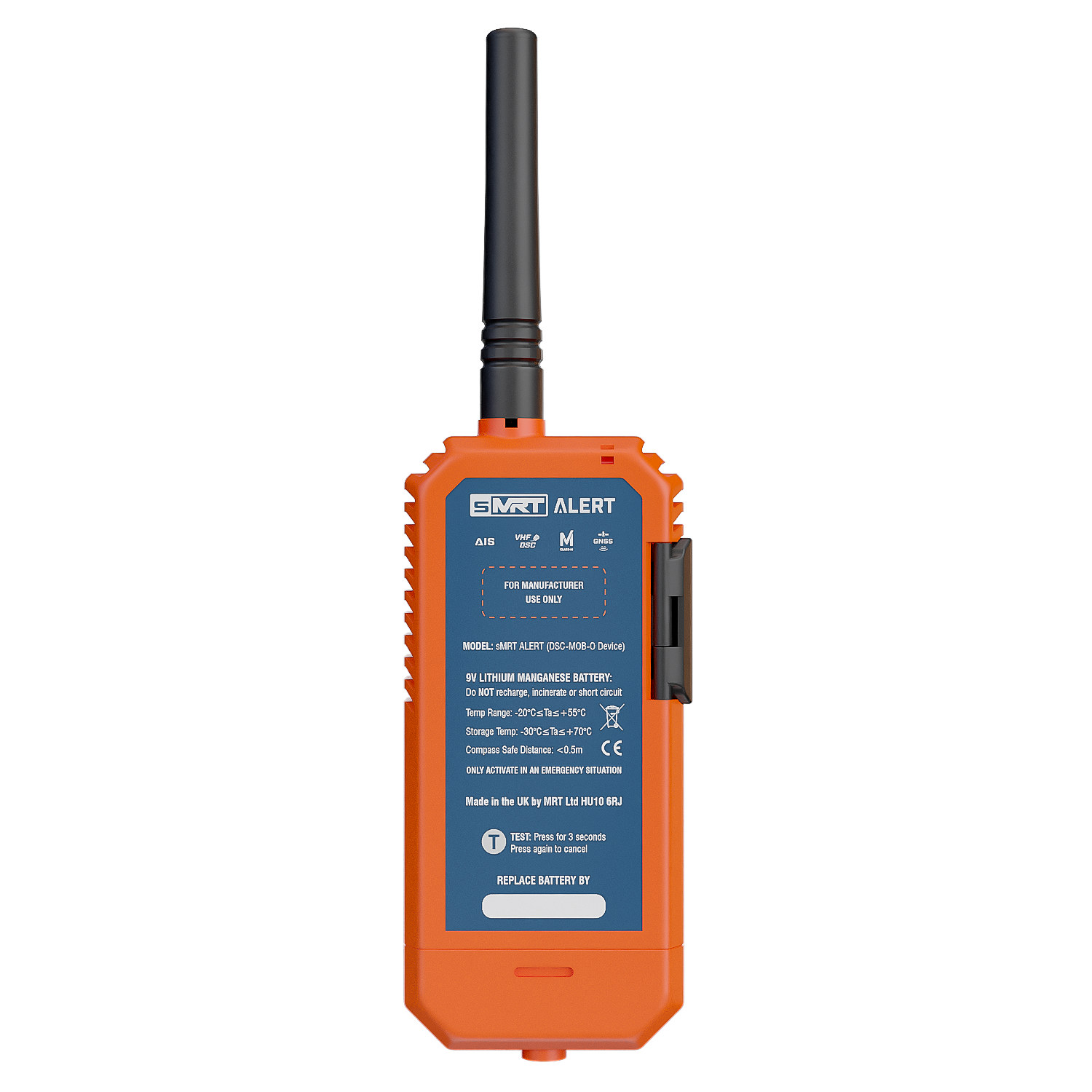
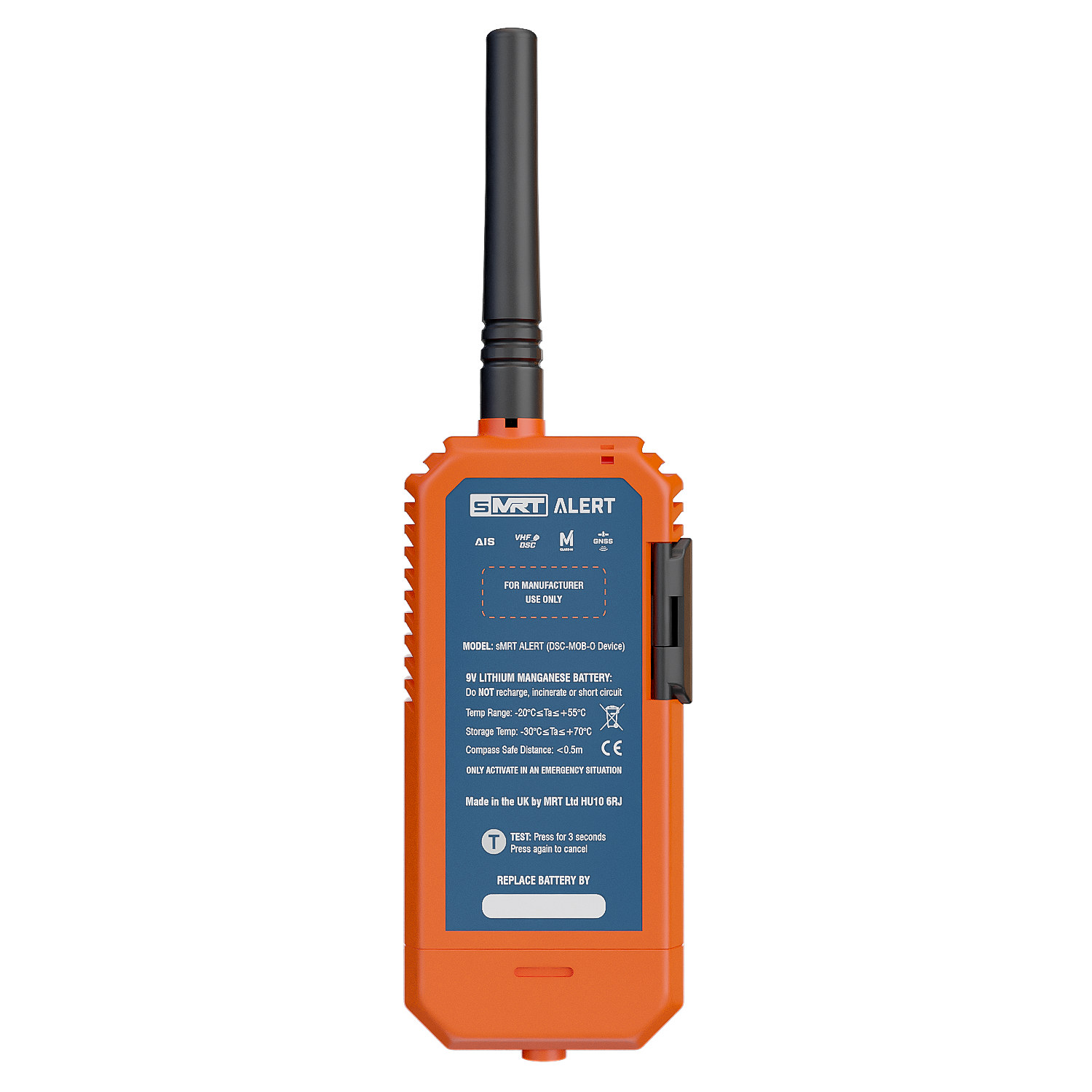
sMRT ALERT Class M MOB beacon, rear view showing the label, AIS, DSC and Class M marksFactory-programmed identity - The beacon has an ITU-R M.585 Maritime Identity with a 972 prefix, programmed at the factory. That identity does not need to be programmed by the user. The manufacturer allocates the MMSI before the unit is shipped. If the contact details or the ownership change, the owner should tell the manufacturer, which keeps a registration record for search and rescue authorities. The sMRT Beacon Management app, used over NFC, can pair one destination MMSI; the user manual describes this for a closed-loop test.

Dual activation - To arm the beacon, open the door, slide the arming switch to ARMED and close the door. Once it is armed, press the ON button for 1 second, or immerse the water sensor for 2 seconds. The beacon does not activate automatically just because a life jacket inflates: if the water sensors do not stay immersed, activate it by hand. To deactivate it, hold the ON button for 3 seconds or slide the arming switch to OFF.

It does not float - The sMRT ALERT is rated IP68 to 10 metres and does not float. Secure it with the supplied tether or carry strap so that it cannot be lost near water.

sMRT Beacon Management app - With NFC you can check whether the beacon is armed or off, view the test history and read the battery status (GOOD or SERVICE REQUIRED). If the battery test shows less than 12 hours remaining, the unit should be returned to the manufacturer or an authorised service agent.

Dimensions
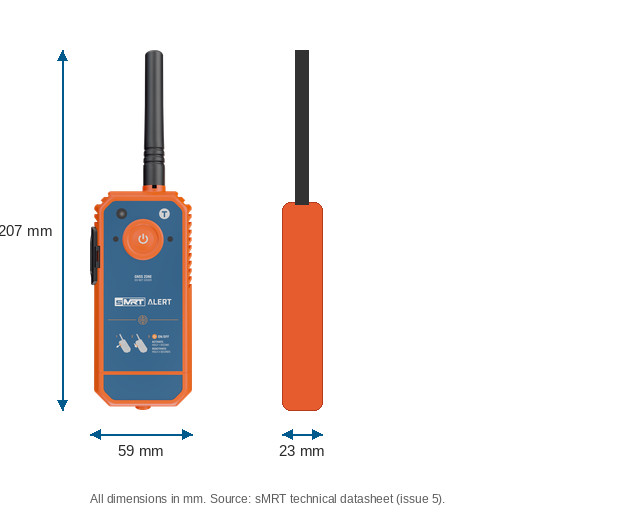
sMRT ALERT dimensions in mm: 207 high including antenna, 59 wide and 23 deep

All dimensions in mm. Drawings based on the official sMRT technical datasheet, issue 5.

  • Height including antenna: 207 mm
  • Width: 59 mm
  • Depth: 23 mm
  • Weight: 180 g

Fitting

sMRT ALERT on a life-jacket oral tube with the supplied mounting clip, official sMRT photoThe sMRT ALERT is designed to integrate with a SOLAS-approved life jacket. The user manual also says it is designed to fit most life jackets, and that you should follow the life-jacket manufacturer's own guidelines.

  1. Fasten the beacon to a secure attachment point with the supplied carry strap or tether so that it cannot be lost.
  2. Use only the manufacturer-supplied clips (bladder clip or oral-tube clip) when fixing it to the life jacket.
  3. Arm the beacon before use and close the arming door.
  4. Check that the water sensor is not obstructed and can reach the water.

Do not put the beacon in the carry pouch when it is mounted in a life jacket. Keep it at least 0.5 m from a compass.

Maintenance

The sMRT ALERT has no user-serviceable parts. Battery replacement and recertification are carried out by the manufacturer or an authorised service agent. A full system test should be done before first use, and then every 3 months once the beacon is in service. Do not test it more than once a month, as that can affect battery performance in an emergency. An annual service and recertification is recommended. If a test shows a red LED, take the unit out of service. At the end of its operational life it should be returned to the manufacturer, or disposed of under local rules.

FAQ

Does the beacon need programming? - The beacon's own MMSI is factory programmed with a 972 prefix, so that identity does not need to be programmed. The sMRT Beacon Management app can pair one destination MMSI over NFC; the user manual describes this for a closed-loop test.

Does it replace a 406 MHz PLB or EPIRB? - No. The sMRT ALERT is a local-area AIS and VHF DSC man-overboard beacon (MSLD). It alerts vessels nearby. It is not a Cospas-Sarsat 406 MHz satellite beacon.

Will it activate when a life jacket inflates? - Only if the water sensor pins are immersed for 2 seconds. Inflation alone does not activate it. If the sensors do not make enough contact with the water, press the ON button.

Does it float? - No. The sMRT ALERT does not float. Secure it with the supplied tether or carry strap.

Specifications

Model sMRT ALERT AIS DSC MOB
Type DSC Class M man-overboard Maritime Survivor Locating Device (MSLD)
Signalling AIS and VHF DSC
AIS frequencies 161.975 MHz and 162.025 MHz (AIS channels 1 and 2)
AIS transmit power Nominal 1 W EIRP
VHF DSC frequency 156.525 MHz (channel 70)
VHF DSC transmit power Nominal 500 mW radiated
Antenna Vertically polarised
GNSS GPS and Galileo; typical time to first fix 15 s at -130 dBm; position updated every minute
Self identity ITU-R M.585 factory-programmed Maritime Identity with 972 prefix
Activation Automatic after 2 seconds of water-sensor immersion, or manual once armed
Alerting period Minimum 12 hours at -20 °C
Alerting radius Typically 5 NM
Strobe 30 candela, 170° dispersion, 12 flashes per minute
Battery 9.0 V 1650 mAh lithium manganese dioxide (LiMnO2)
Battery shelf life 5 years at +20 °C
Operational battery life 5 years from first use (user manual)
Operating temperature -20 °C to +55 °C (IEC 60945)
Storage temperature -30 °C to +70 °C (IEC 60945)
Environmental rating IP68 to 10 m; the beacon does not float
Dimensions 207 mm (H, including antenna) x 59 mm (W) x 23 mm (D)
Weight 180 g
Compass safe distance 0.5 m
Mounting Designed to integrate with a SOLAS-approved life jacket; bladder clip, oral-tube clip, carry strap and tether supplied
Approvals CE, RED 2014/53/EU (EU type examination DK-RED003521 i01, notified body 2443); ECC/DEC/(22)02 Class M; RTCM 11901.2; IEC 63269; EN 303 132; EN 303 098; EN 302 152-1
Battery transport UN3091 lithium metal batteries contained in equipment (IATA PI 970 Section II)
Origin Made in the UK (device label)

Included

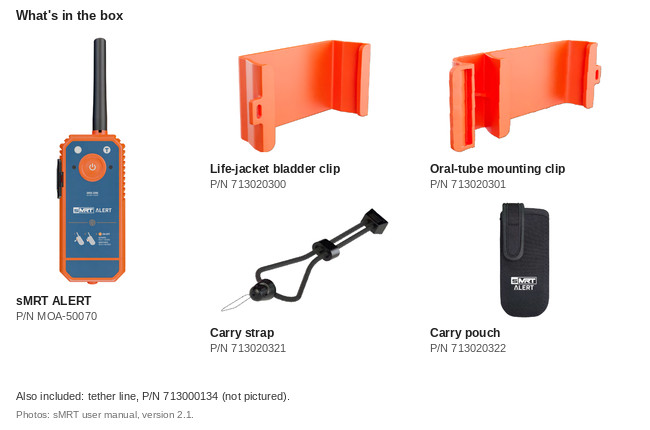
sMRT ALERT box contents: the beacon, life-jacket bladder clip, oral-tube clip, carry strap and pouch

  • sMRT ALERT beacon, P/N MOA-50070
  • Life-jacket bladder attachment clip, P/N 713020300
  • Oral-tube mounting clip, P/N 713020301
  • Carry strap, P/N 713020321
  • Carry pouch, P/N 713020322
  • Tether line, P/N 713000134

Box contents follow the official user manual, version 2.1 (September 2026). The shorter quick start guide lists the beacon, the two clips and the carry strap only.

Optional Accessories

The clips, carry strap, pouch and tether are supplied with the beacon. The store does not currently list separate sMRT accessories or a replacement battery. Battery replacement is carried out by the manufacturer or an authorised service agent.

sMRT ALERT technical datasheet, issue 5, September 2026 (EN) (149 Kb) - Download

sMRT ALERT product brochure, issue 7 (EN) (1,350 Kb) - Download

sMRT ALERT quick start guide (EN) (3,848 Kb) - Download

sMRT ALERT user manual, version 2.1, September 2026 (EN) (5,208 Kb) - Download

sMRT ALERT EU declaration of conformity, October 2026 (EN) (205 Kb) - Download

EU type examination certificate DK-RED003521 i01 (EN) (512 Kb) - Download

No posts found

Write a review

sMRT ALERT AIS and DSC Class M MOB beacon, front view on whiteThe sMRT ALERT is a Class M man-overboard (MOB) Maritime Survivor Locating Device (MSLD) made by Marine Rescue Technologies Ltd (MRT). Once the beacon is armed, it is designed to activate automatically if it is immersed in water. It can also be activated by hand.

After activation it transmits GMDSS VHF DSC distress alerts and keeps its AIS position up to date. A GPS and Galileo receiver provides the position, and a 30-candela strobe helps rescuers see the beacon.

AIS and VHF DSC alerts - Within 30 seconds of a GNSS position the beacon transmits AIS on AIS channel 1 (161.975 MHz) and AIS channel 2 (162.025 MHz) at a nominal 1 W EIRP. The first open-loop DSC alert on VHF channel 70 (156.525 MHz) is sent within 30 seconds of activation, then every 5 minutes for the first 30 minutes and every 10 minutes after that, until a VHF DSC acknowledgement is received or the battery is exhausted. The typical alerting radius is 5 NM. The first DSC message with GPS data is sent as soon as a GNSS position is available.

Class M - The sMRT ALERT complies with ECC/DEC/(22)02 for man-overboard devices. In countries that adopt that decision, only Class M MOB devices and mobile aids to navigation may operate on AIS channels 1 and 2 from 31 December 2024. Devices that are not Class M are restricted to AIS channel 2006, which is not monitored for emergencies.

sMRT ALERT features: strobe, coloured LEDs, arming door, GNSS zone, NFC and water activation

sMRT ALERT Class M MOB beacon, rear view showing the label, AIS, DSC and Class M marksFactory-programmed identity - The beacon has an ITU-R M.585 Maritime Identity with a 972 prefix, programmed at the factory. That identity does not need to be programmed by the user. The manufacturer allocates the MMSI before the unit is shipped. If the contact details or the ownership change, the owner should tell the manufacturer, which keeps a registration record for search and rescue authorities. The sMRT Beacon Management app, used over NFC, can pair one destination MMSI; the user manual describes this for a closed-loop test.

Dual activation - To arm the beacon, open the door, slide the arming switch to ARMED and close the door. Once it is armed, press the ON button for 1 second, or immerse the water sensor for 2 seconds. The beacon does not activate automatically just because a life jacket inflates: if the water sensors do not stay immersed, activate it by hand. To deactivate it, hold the ON button for 3 seconds or slide the arming switch to OFF.

It does not float - The sMRT ALERT is rated IP68 to 10 metres and does not float. Secure it with the supplied tether or carry strap so that it cannot be lost near water.

sMRT Beacon Management app - With NFC you can check whether the beacon is armed or off, view the test history and read the battery status (GOOD or SERVICE REQUIRED). If the battery test shows less than 12 hours remaining, the unit should be returned to the manufacturer or an authorised service agent.

Dimensions

sMRT ALERT dimensions in mm: 207 high including antenna, 59 wide and 23 deep

All dimensions in mm. Drawings based on the official sMRT technical datasheet, issue 5.

  • Height including antenna: 207 mm
  • Width: 59 mm
  • Depth: 23 mm
  • Weight: 180 g

Fitting

sMRT ALERT on a life-jacket oral tube with the supplied mounting clip, official sMRT photoThe sMRT ALERT is designed to integrate with a SOLAS-approved life jacket. The user manual also says it is designed to fit most life jackets, and that you should follow the life-jacket manufacturer's own guidelines.

  1. Fasten the beacon to a secure attachment point with the supplied carry strap or tether so that it cannot be lost.
  2. Use only the manufacturer-supplied clips (bladder clip or oral-tube clip) when fixing it to the life jacket.
  3. Arm the beacon before use and close the arming door.
  4. Check that the water sensor is not obstructed and can reach the water.

Do not put the beacon in the carry pouch when it is mounted in a life jacket. Keep it at least 0.5 m from a compass.

Maintenance

The sMRT ALERT has no user-serviceable parts. Battery replacement and recertification are carried out by the manufacturer or an authorised service agent. A full system test should be done before first use, and then every 3 months once the beacon is in service. Do not test it more than once a month, as that can affect battery performance in an emergency. An annual service and recertification is recommended. If a test shows a red LED, take the unit out of service. At the end of its operational life it should be returned to the manufacturer, or disposed of under local rules.

FAQ

Does the beacon need programming? - The beacon's own MMSI is factory programmed with a 972 prefix, so that identity does not need to be programmed. The sMRT Beacon Management app can pair one destination MMSI over NFC; the user manual describes this for a closed-loop test.

Does it replace a 406 MHz PLB or EPIRB? - No. The sMRT ALERT is a local-area AIS and VHF DSC man-overboard beacon (MSLD). It alerts vessels nearby. It is not a Cospas-Sarsat 406 MHz satellite beacon.

Will it activate when a life jacket inflates? - Only if the water sensor pins are immersed for 2 seconds. Inflation alone does not activate it. If the sensors do not make enough contact with the water, press the ON button.

Does it float? - No. The sMRT ALERT does not float. Secure it with the supplied tether or carry strap.

Specifications

Model sMRT ALERT AIS DSC MOB
Type DSC Class M man-overboard Maritime Survivor Locating Device (MSLD)
Signalling AIS and VHF DSC
AIS frequencies 161.975 MHz and 162.025 MHz (AIS channels 1 and 2)
AIS transmit power Nominal 1 W EIRP
VHF DSC frequency 156.525 MHz (channel 70)
VHF DSC transmit power Nominal 500 mW radiated
Antenna Vertically polarised
GNSS GPS and Galileo; typical time to first fix 15 s at -130 dBm; position updated every minute
Self identity ITU-R M.585 factory-programmed Maritime Identity with 972 prefix
Activation Automatic after 2 seconds of water-sensor immersion, or manual once armed
Alerting period Minimum 12 hours at -20 °C
Alerting radius Typically 5 NM
Strobe 30 candela, 170° dispersion, 12 flashes per minute
Battery 9.0 V 1650 mAh lithium manganese dioxide (LiMnO2)
Battery shelf life 5 years at +20 °C
Operational battery life 5 years from first use (user manual)
Operating temperature -20 °C to +55 °C (IEC 60945)
Storage temperature -30 °C to +70 °C (IEC 60945)
Environmental rating IP68 to 10 m; the beacon does not float
Dimensions 207 mm (H, including antenna) x 59 mm (W) x 23 mm (D)
Weight 180 g
Compass safe distance 0.5 m
Mounting Designed to integrate with a SOLAS-approved life jacket; bladder clip, oral-tube clip, carry strap and tether supplied
Approvals CE, RED 2014/53/EU (EU type examination DK-RED003521 i01, notified body 2443); ECC/DEC/(22)02 Class M; RTCM 11901.2; IEC 63269; EN 303 132; EN 303 098; EN 302 152-1
Battery transport UN3091 lithium metal batteries contained in equipment (IATA PI 970 Section II)
Origin Made in the UK (device label)

Included

sMRT ALERT box contents: the beacon, life-jacket bladder clip, oral-tube clip, carry strap and pouch

  • sMRT ALERT beacon, P/N MOA-50070
  • Life-jacket bladder attachment clip, P/N 713020300
  • Oral-tube mounting clip, P/N 713020301
  • Carry strap, P/N 713020321
  • Carry pouch, P/N 713020322
  • Tether line, P/N 713000134

Box contents follow the official user manual, version 2.1 (September 2026). The shorter quick start guide lists the beacon, the two clips and the carry strap only.

Optional Accessories

The clips, carry strap, pouch and tether are supplied with the beacon. The store does not currently list separate sMRT accessories or a replacement battery. Battery replacement is carried out by the manufacturer or an authorised service agent.

sMRT ALERT technical datasheet, issue 5, September 2026 (EN) (149 Kb) - Download

sMRT ALERT product brochure, issue 7 (EN) (1,350 Kb) - Download

sMRT ALERT quick start guide (EN) (3,848 Kb) - Download

sMRT ALERT user manual, version 2.1, September 2026 (EN) (5,208 Kb) - Download

sMRT ALERT EU declaration of conformity, October 2026 (EN) (205 Kb) - Download

EU type examination certificate DK-RED003521 i01 (EN) (512 Kb) - Download

No posts found

Write a review